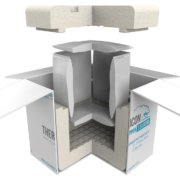
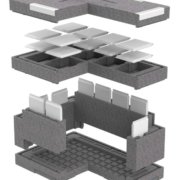
Pre-qualified thermal packaging for pharmaceuticals and biotech
Pre-qualification applies to the tested system configuration of insulated shipper, coolant packs and packout – not to the insulated shipper alone.
THERMOCON supplies complete systems tested in climatic chambers for temperature-controlled transport – tested against established ISTA and AFNOR ambient temperature profiles, from single-use parcel shippers to reusable pallet systems.
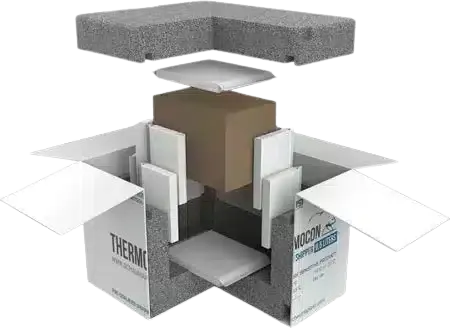
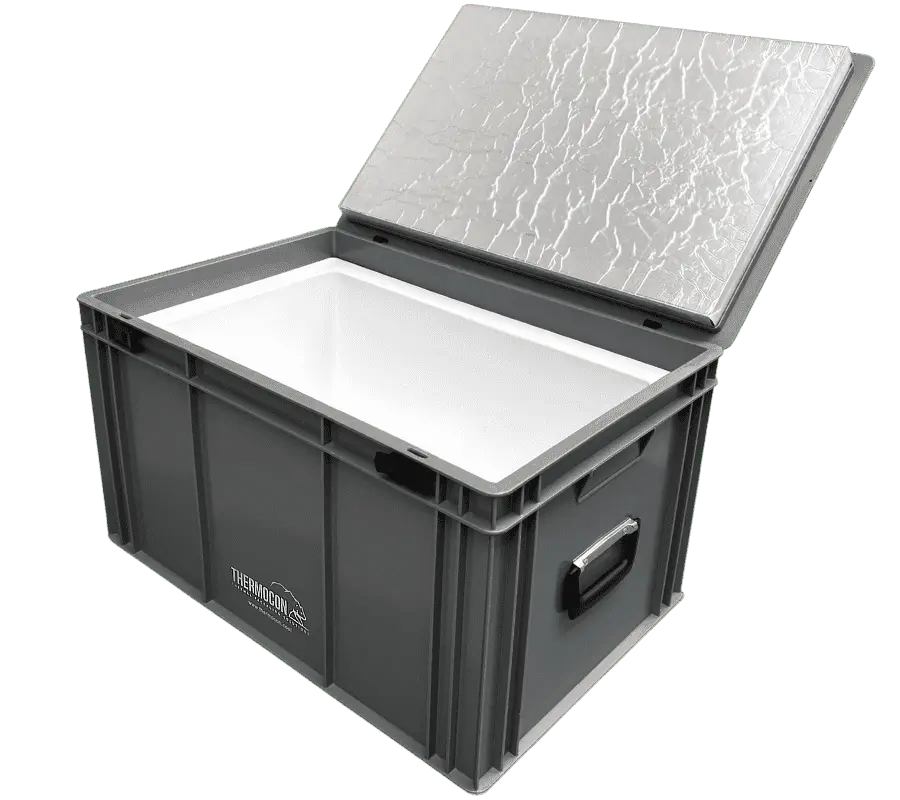
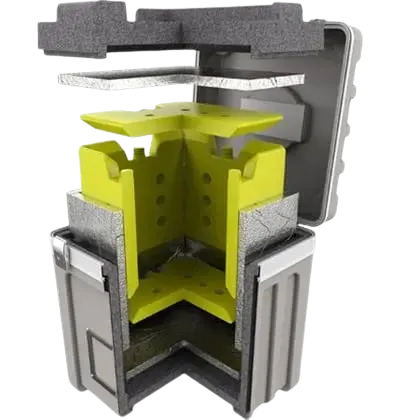
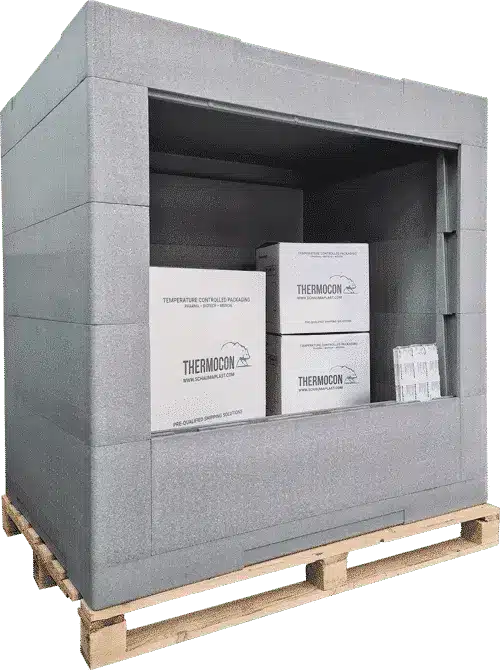
Six product lines – Classic, Slim, Medi, Paper, Premium and Pallet Line for different transport processes
Single-use or reusable – matched to shipping frequency, return logistics and cost model
Seasonal or universal packout – depending on how predictable ambient temperatures are along the shipping route
+2 to +8 °C, +15 to +25 °C, −15 to −25 °C and < −60 °C – pre-qualified for typical pharmaceutical temperature ranges
Hold times from 24 to over 120 h – demonstrated in climatic chamber tests against ISTA and AFNOR profiles
Payload volumes from 1.3 to 1,210 l – from small parcels to full pallet loads
Our standard THERMOCON coolant pack fits a wide range of sizes and solutions across product lines.
THERMOCON
CLASSIC LINE
THERMOCON
PALLET LINE
THERMOCON
MEDI LINE
THERMOCON
PAPER LINE
Simplified
Procurement & stockholding
Fewer
Variants to manage
Greater
Flexibility in everyday use
Two coolant options.
THERMOCON standard coolant packs: same size, same performance – compatible with 30 systems. Reusable hard-shell coolant pack or single-use foam brick.
THERMOCON
HARD-SHELL COOLANT PACK
Reusable
THERMOCON
FOAM BRICK
Single-use
Reusable option
Single-use option
Same performance
One shipper. Four temperature ranges.
In most pre-qualified THERMOCON systems, the same basic shipper can be used for different temperature ranges – simply by changing the coolant pack set.
+2 to +8°C
Use one of the following sets:
-15 to -25°C
+15 to +25°C
Use one of these sets:
-60 °C
ONE BASIC SHIPPER. MAXIMUM FLEXIBILITY.
The basic shippers used in all THERMOCON systems are pre-qualified for multiple temperature ranges. This reduces complexity, stockholding, procurement and handling effort.
Select by transport type
Pre-qualified thermal packaging by transport type
The transport type affects shipper format, packout, handling, temperature profile, hold time margin, freight costs and risk. Selection should therefore take account of the shipping route as well as the temperature range.
Parcel shipping
Pre-qualified systems for parcel shipping need to combine thermal performance, ease of handling and cost-effectiveness. Key factors are a repeatable packout, clearly defined conditioning and a system size suited to the payload, hold time and shipping process.
Parcel shipping
Single-use
Classic Line
Cost-effective parcel solution based on EPS shippers
Pallet shippers can be a suitable choice for larger shipment volumes, air freight or international pharmaceutical shipping lanes. Key considerations are hold times, payload volume, freight costs and product value.
Pallet shipping
Single-use
Pallet Line
High-capacity thermal packaging for pallet transport – modular adjustment using extension frames.
Reusable systems suit recurring transport processes that can be controlled. Key considerations are return logistics, cleaning, handling, total cost of ownership (TCO) and whether the transport process is sufficiently predictable.
Parcel shipping
Reusable
Slim Line
High-performance reusable solution with vacuum insulation
The right pre-qualified system for your application
Start by choosing the temperature range you need. Then narrow down the product line, the coolant and the reuse concept.
Select temperature range
NOTE: The temperature range describes the target temperature of the goods — not the melting point or phase-change temperature of the cooling element. Suitability follows from the packaging system, the pack-out and the conditioning.
Narrow down product line, coolant & use
Paper Line
Paper-based single-use parcel solutions
Fully recyclable paper-based thermal packaging for temperature-controlled shipments.
Recyclable Disposal with waste paper
Pre-qualified Tested temperature performance
Reduced plastic Sustainable choice of material
CLASSIC LINE
EPS-based single-use parcel solutions
Cost-focused single-use EPS solution for temperature-controlled shipments. Efficient, lightweight and ideal for pharmaceutical products and life-science applications.
No items match this selection. Please adjust the filters.
You can request several products together.
Understanding pre-qualification
What does “pre-qualified” mean for thermal packaging?
Pre-qualification applies to the tested passive packaging configuration – not to the insulated shipper alone.
The tested system configuration
Insulated shipper
Coolant packs / PCM
Packout
No or minimal payload
Ambient temperature profile
Pre-qualified system
THERMOCON pre-qualifies systems in a worst-case scenario – with no or minimal payload.
Performance data apply to the defined combination of components and test conditions.
Climatic chamber testing under defined conditions
What does the test demonstrate?
The system configuration maintains the specified temperature range for the stated hold time.
Temperature ranges and test profiles
Pre-qualification uses standardised ISTA or AFNOR ambient temperature profiles as well as profiles representative of real-world conditions.
+2 to +8 °C
+15 to +25 °C
−15 to −25 °C
Dry ice
When is reassessment required?
When the product, payload, route, hold time, packing process, coolant conditioning or temperature requirement changes.
Important: no unconditional temperature guarantee
Documented performance applies exclusively to the tested configuration and the underlying test conditions. Suitability must be assessed for the specific application.
From pre-qualification to qualification
From a pre-qualified system to one qualified for your application
Pre-qualification applies to the tested passive packaging configuration – not to the insulated shipper alone.
01
Pre-qualified system
Tested and documented performance data for a defined configuration and defined conditions.
02
Assessment against the shipping process
The proposed packaging is assessed against the customer’s actual or representative conditions.
03
System qualified for the customer’s application
Thermal performance is demonstrated under conditions representative of the customer’s application.
Pre-qualified system
Product specification
Temperature limits
Actual or representative payload
Packout
Conditioning of coolant packs / PCM packs
Shipping route
Seasonal ambient temperature profiles
Transit time
Handling and transfer points
Safety margin
The result determines the next step
Use the existing system
The pre-qualified system meets the requirements in its existing configuration.
Adapt the packout
The positioning, number or conditioning of coolant packs is adjusted.
Develop a bespoke solution
Bespoke thermal packaging is developed for the specific transport process.
Documented evidence of thermal performance can be incorporated into GDP-compliant transport processes.
Choose a packout
Select by coolant pack configuration
If ambient temperatures along the shipping route are predictable, a seasonal packout can be tailored to summer, winter or transitional conditions. This is often more cost-effective, but requires reliable selection of the correct seasonal configuration. Where ambient temperatures vary widely, on international routes or in hot-to-cold or cold-to-hot shipments, a universal packout is usually more suitable, as a single configuration provides more robust protection under changing ambient conditions.
Seasonal Packout
SUMMER / WINTER CONFIGURATION
Adapted to the seasonal temperature profile
Lower material costs
Optimised for clearly defined seasons
More planning and training required
Ideal for stable seasonal processes
Universal Packout
YEAR-ROUND CONFIGURATION
One configuration for changing ambient conditions
Simpler storage and process management
Lower risk of mix-ups
Often higher material costs
Ideal for standardised processes across multiple shipping lanes
Suitable product lines with seasonal packouts
Parcel shipping
Single-use
Classic Line
Cost-effective parcel solution based on EPS shippers
provided that the universal configuration is qualified for the specific shipping route and defined temperature limits.
A seasonal packout is not inherently less safe when correctly selected and appropriately qualified. A universal packout, however, often reduces the risks associated with incorrect seasonal selection and unexpected ambient temperatures.
Frequently asked questions
What is pre-qualified thermal packaging?
Pre-qualified thermal packaging has been tested as a defined system configuration in climatic chambers – with a specified packout, payload, conditioning, hold time and ambient temperature profile. Under these conditions, testing demonstrated that the temperature in the payload compartment remained within the defined target temperature range for the stated hold time.
Is pre-qualified thermal packaging automatically suitable for every shipment?
Pre-qualified thermal packaging is not automatically suitable for every shipment. It demonstrates the thermal performance of a defined system configuration under specified test conditions. Before use, an assessment is needed to establish whether these conditions adequately represent the specific transport process. Customer-specific temperature data, route, payload or hold time may indicate that changes to the packaging system would be beneficial – for example, to the packout, coolant pack configuration or conditioning.
Can pre-qualified thermal packaging be used in GDP-compliant transport processes?
Yes, it can form part of documented GDP-compliant transport processes. Thermal packaging should be regarded as one element of the overall process. It cannot ensure GDP compliance on its own.
What does a hold time of 24h, 48h or 72h mean?
The hold time is the period for which a system remained within the specified temperature range under defined test conditions. Hold times cannot be compared reliably without information on the ambient temperature profile, payload, packout and conditioning.
Which temperature ranges are available?
Typical temperature ranges are +2 to +8 °C, +15 to +25 °C and -15 to -25 °C, alongside dry ice or deep-frozen applications. Bespoke PCM melting points, adapted packouts or customer-specific tests may be appropriate for special requirements.
When is a climatic chamber test necessary?
A climatic chamber test is particularly appropriate when existing test data do not adequately represent the actual transport process, or when product value, product sensitivity, route, temperature requirements, payload, hold time or risk profile call for additional assurance. When qualifying thermal packaging for transport processes subject to GDP requirements, climatic chamber testing is one of the key methods for demonstrating thermal performance under defined or representative conditions. Depending on the application, several rounds of testing and optimisation may be necessary – for example, with different packouts, coolant pack configurations, conditioning procedures, payloads and ambient temperature profiles.
Have a pre-qualified packaging system assessed
Do you already know the required temperature range, hold time, payload or transport type? THERMOCON can help you shortlist a suitable pre-qualified system and assess whether existing data are sufficient for your application or whether an adjustment would be beneficial.
You are currently viewing a placeholder content from Vimeo. To access the actual content, click the button below. Please note that doing so will share data with third-party providers.
You are currently viewing a placeholder content from YouTube. To access the actual content, click the button below. Please note that doing so will share data with third-party providers.
You are currently viewing a placeholder content from Mailchimp. To access the actual content, click the button below. Please note that doing so will share data with third-party providers.
You are currently viewing a placeholder content from Turnstile. To access the actual content, click the button below. Please note that doing so will share data with third-party providers.